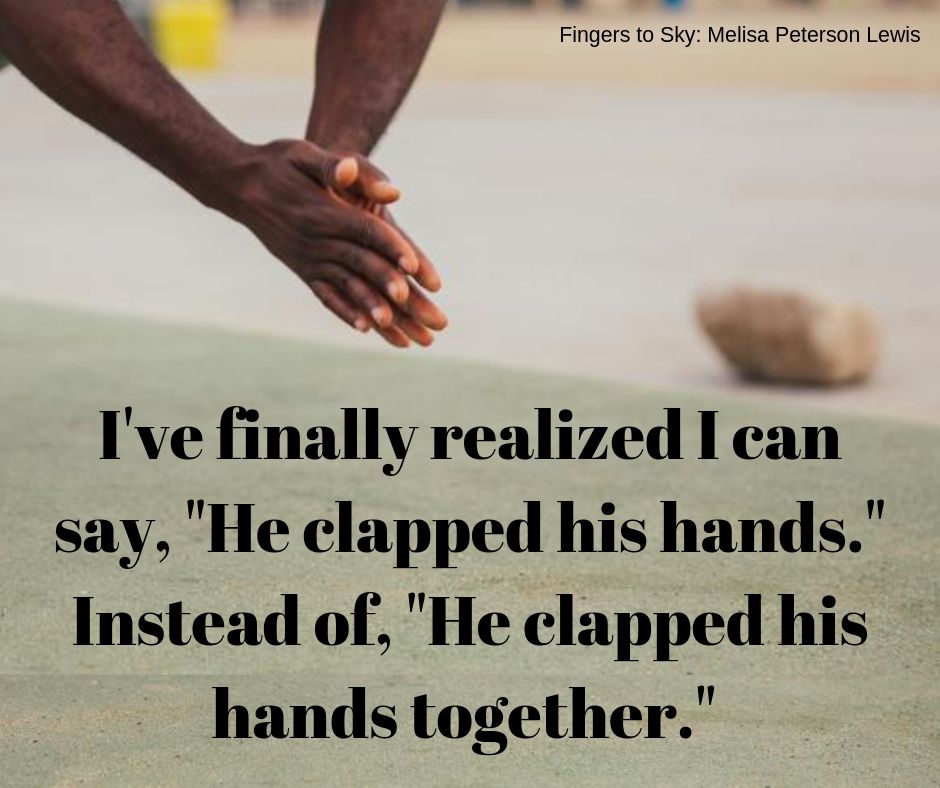
Guess what. You don’t have to say, “He clapped his hands together.” Do you know why? Because to make a clap, your hands come together, it’s implied. I can simply say, “He clapped his hands.”
This may seem so small to someone who isn’t a writer, but as a reader, you’ll appreciate stories moving at a good pace. Extra words add up quick. So quick! An example. I wrote a story that needed to be under 2,000 words. When I draft a story I just write it out and don’t look at the word count until I’m done. I was 732 words over what my limit could be. Submissions and contests always have a word range you have to work with.
By editing alone I removed some of the “sticky” words, like the evil word THAT. I went through again and shortened sentences and removed ones that didn’t propel the story as it should. Believe it or not, it was pretty easy to take the story down to my word goal.
Here are some writers insights that have stuck with me. Me, the unpublished, unpaid, writer, learning as I go! I know, I’m no authority here but a lot of this makes sense.
When you tell someone to sit, you don’t have to say sit down. We know their butt is going in that direction. When I say something like, “The room is packed with twenty people inside.” I really don’t need to say inside. Actually, right there is another example. I can toss the word “really” from this blog.
In fact, I try to use these words only in dialogue: really, look, think, feel. I’ve found people talk with a lot of these types of words. And if I remove them the character can sound robotic.
Then there is this showing versus telling thing that is HUGE in the writer’s world. You want to show readers that someone is happy, not tell them.
Example, “Carmen was happy!”
Better, “Carmen stands up on her tippy toes, claps her hands, and smiles wide.”
This world of writing is interesting. A single word can be analyzed over and over.
Photo from Burst, edited with Canva.


 Melisa Peterson Lewis
Leave a reply to -Eugenia Cancel reply